You’ve seen the iconic photos—the temples, the rice fields, the beach clubs. But what if you’re a curious traveler seeking something more? A deeper connection to the island’s culture, its art, and its stunning, untamed nature. From my own experiences living and exploring Bali, I’ve found that the most memorable moments happen when you step away from the tourist checklist and into a world of unique, hands-on activities.
This article is a first-person guide to the experiences that will surprise you, teach you, and give you a story to tell that goes beyond the typical vacation narrative.
1. Take a Balinese Cooking Class: The Story on Your Plate
While many people eat at Balinese restaurants, few get to learn the secrets behind the island’s rich, flavorful cuisine. A cooking class isn’t just about recipes; it’s an immersive cultural experience that connects you directly to the local way of life.
I signed up for a class in Ubud that started with a trip to a traditional market. My guide, a warm and friendly local chef, taught me how to haggle for the freshest spices and vegetables. Back at her home, nestled among rice paddies, I learned to grind spices by hand, grate coconuts for milk, and use a traditional mortar and pestle. The final product was a feast of my own making: a fragrant Sate Lilit (minced fish satay), a spicy Sambal Matah (raw chili paste), and a creamy Sayur Urab (mixed vegetables with grated coconut). Every bite was a reward, not just for my taste buds, but for the effort and knowledge I had gained.
Practical Information:
Cost: Prices range from IDR 300,000 to IDR 800,000 ($20 to $50 USD) per person, depending on the school and what’s included (market tour, transportation, etc.).
What to Expect: A hands-on, multi-hour experience, often with a market tour. The atmosphere is relaxed and fun, with a lot of interaction with the local chef. You will prepare several dishes from scratch and then enjoy the feast you’ve made.
What to Prepare: Bring an appetite and comfortable shoes for the market walk. You don’t need to bring any equipment or ingredients.
Tips: Ask questions! The chefs are passionate about their food and culture and are happy to share their knowledge. This is a great way to learn about the philosophy behind Balinese cooking.
2. Experience a Balinese Purification Ceremony (Melukat): A Spiritual Cleansing
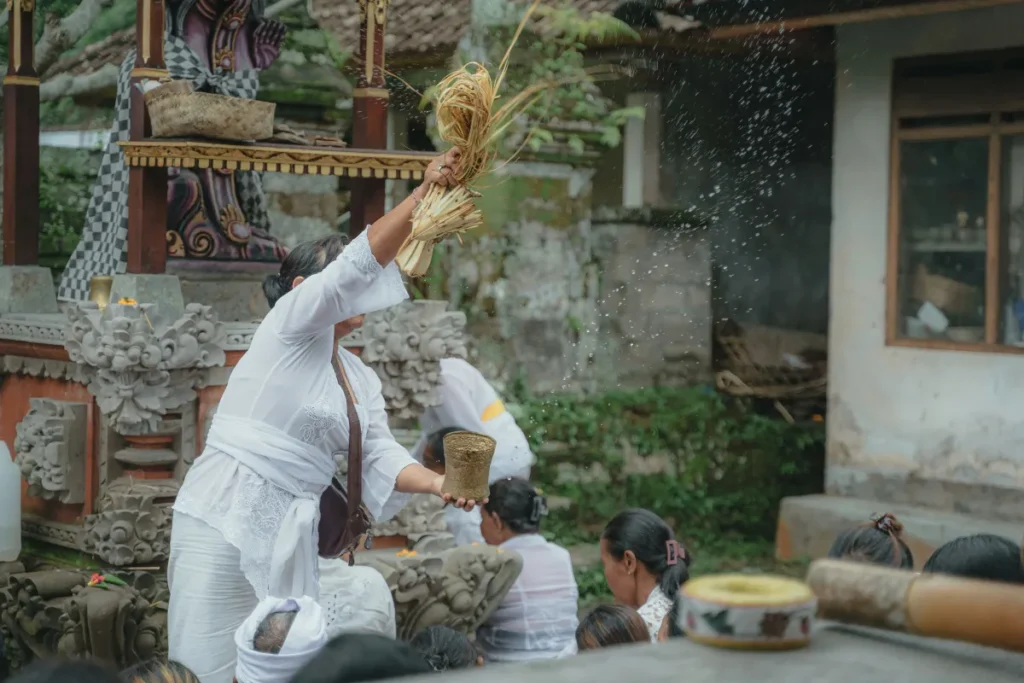
Bali is an island of deep spirituality, and a Melukat is a powerful, sacred tradition rarely experienced by tourists. It’s an opportunity to cleanse your mind, body, and spirit and to participate in a centuries-old ritual.
I was invited by a local friend to join a purification ceremony at a hidden temple spring. We wore traditional sarongs and were guided by a local priest. The ritual involved praying at an altar, offering flowers, and then bathing in the sacred spring. I stood under the cold water spouts, feeling the water wash over me, a physical and spiritual release. The feeling of the cool, clear water and the quiet, reverent atmosphere was a powerful contrast to the bustling tourist hubs. It wasn’t about a photo opportunity; it was a deeply personal, meditative moment that connected me to the heart of Balinese belief.
Practical Information:
Cost: The cost can vary. If you go to a public temple like Tirta Empul, the entrance fee is about IDR 50,000, plus a small donation for the purification sarong rental (IDR 10,000-20,000). If you book a private tour, the price can range from IDR 300,000 to IDR 1,000,000 or more, but it includes a guide, offerings, and transportation.
What to Expect: A humbling, serene, and deeply spiritual experience. You will be guided through a series of prayers and purification rituals. It’s a quiet and respectful process.
What to Prepare: Bring a change of clothes and a towel, as you will get wet. You must wear a sarong and sash, which are available for rent at the temple. Women should avoid participating during menstruation.
Tips: Approach this experience with sincerity and respect. It is a sacred ritual, not a tourist attraction. Leave your phone and camera in a locker or with a friend to fully immerse yourself in the moment.
Read more: Discover the Best Water Temple in Bali: A Spiritual Journey Through Bali’s Sacred Waters
3. Learn Traditional Balinese Crafts: From Woodcarving to Silver Jewelry
Bali is an island of artisans, and their skills are passed down through generations. Instead of just buying a souvenir, you can create one with your own hands, learning from a master artisan.
I found a small workshop in Ubud where I spent an afternoon with a local silversmith. He showed me the intricate process of melting silver, shaping it with small hammers, and polishing it into a beautiful ring. The final product wasn’t perfect, but it was mine, a tangible memory of my time on the island. Similarly, I’ve heard incredible stories from people who’ve taken batik painting or traditional basket-weaving classes.
Practical Information:
Cost: Silver jewelry classes range from IDR 250,000 to IDR 500,000. Woodcarving or painting classes are typically IDR 300,000 to IDR 600,000. The cost usually includes materials.
What to Expect: A focused, hands-on workshop lasting 2-4 hours. You’ll be guided step-by-step by an experienced artist.
What to Prepare: Wear comfortable clothes you don’t mind getting a little messy. You don’t need any prior experience.
Tips: Look for classes that are run by local families in their homes or small workshops. This provides a more authentic and intimate experience.
4. Chase the Waterfalls of the North: A Journey to Secluded Beauty
While many people visit a single waterfall, a more adventurous and unique experience is to go on a “waterfall hunt.” Northern Bali is a hidden kingdom of cascades, each with its own character. The journey itself is as rewarding as the destination.
I rented a scooter and spent a full day driving through the winding mountain roads of Munduk and Buleleng. I started at the well-known Gitgit Waterfall but quickly moved on to the lesser-known gems. My favorite was Sekumpul Waterfall, a series of powerful, towering cascades that are so large you feel like an ant in their presence. The path to get there was a true trek—down steep stairs, across a river, and through a dense jungle. It was an adventure, and the reward was a spectacular sight that few tourists ever see.
Practical Information:
Cost: Entrance fees for waterfalls range from IDR 10,000 to IDR 20,000. At Sekumpul Waterfall, you may be required to hire a local guide, which can cost IDR 250,000 or more.
What to Expect: A moderate to difficult hike with uneven, slippery terrain. The journey can involve crossing rivers and climbing many stairs. The reward is a breathtaking natural spectacle.
What to Prepare: Wear sturdy, closed-toe shoes with good grip. Bring plenty of water, insect repellent, a swimsuit, and a towel. A waterproof bag for your phone and camera is highly recommended.
Tips: Go early in the morning to beat the heat and crowds. Download an offline map, as cell service can be spotty in the mountains. Hire a local guide for safety and a deeper understanding of the area.
Read also: Bali Hidden Gem: Best Secret Spots for the Curious Traveler
5. Explore the Abandoned: A Glimpse into Bali’s Mysteries
Why it’s unique: Beyond the vibrant, living culture of Bali lies a world of abandoned places that offer a glimpse into the island’s untold stories. These are not on any tour bus route and require a sense of adventure.
I visited the infamous Taman Festival Park, an abandoned amusement park in Sanur that has been reclaimed by the jungle. The rusting roller coaster and crumbling food stalls, covered in moss and vines, create a hauntingly beautiful and surreal atmosphere. It feels like stepping into a post-apocalyptic movie set. Another site is the Pura Paluang, a small temple on Nusa Penida with a courtyard full of concrete cars and a scooter, believed to be used as a place for ancestor worship. These places are not for everyone, but for a photographer or a curious mind, they offer a truly unique perspective on the island.
Practical Information:
Cost: Entrance is often not official, but a small “donation” of IDR 20,000 to IDR 50,000 is often requested by a local person at the gate.
What to Expect: These sites are decaying and can have unstable structures. The paths are overgrown, and there may be sharp metal or glass. Be cautious and aware of your surroundings. The atmosphere is eerie but fascinating.
What to Prepare: Wear closed-toe shoes and long pants to protect yourself from bugs and sharp objects. Bring a small flashlight for dark areas.
Tips: Never explore these sites alone. Go with a friend or a trusted local guide. Be respectful of the area and do not litter or disturb any offerings. Remember, some locals believe these places are home to spirits.
Go Beyond the Obvious
Bali is a treasure trove of experiences, and while the top attractions are a great starting point, the most profound memories often come from the road less traveled. These unique activities teach you about the culture, challenge your sense of adventure, and give you a personal story that is uniquely yours. Don’t be afraid to go beyond the ordinary; it’s where the magic truly lies.
Ultimately, the most authentic Bali isn’t a place you find on a map; it’s a feeling you discover when you allow yourself to be open to the unexpected. It’s in the quiet moments: the shared laughter in a cooking class, the serene feeling of a temple purification, or the awe of a secluded waterfall. So, go ahead and explore the iconic sites, but be sure to set aside time to get a little lost. In doing so, you won’t just visit Bali—you’ll truly experience it.