Bali is famous of it’s vibrant cultural traditions. One of the most captivating aspects of Balinese culture is Balinese dance, a centuries-old art form that combines intricate movements, dramatic expressions, and ceremonial significance. For tourists seeking an authentic cultural experience in Bali, watching a traditional dance performance is a must.
What Is Balinese Dance for Balinese People?
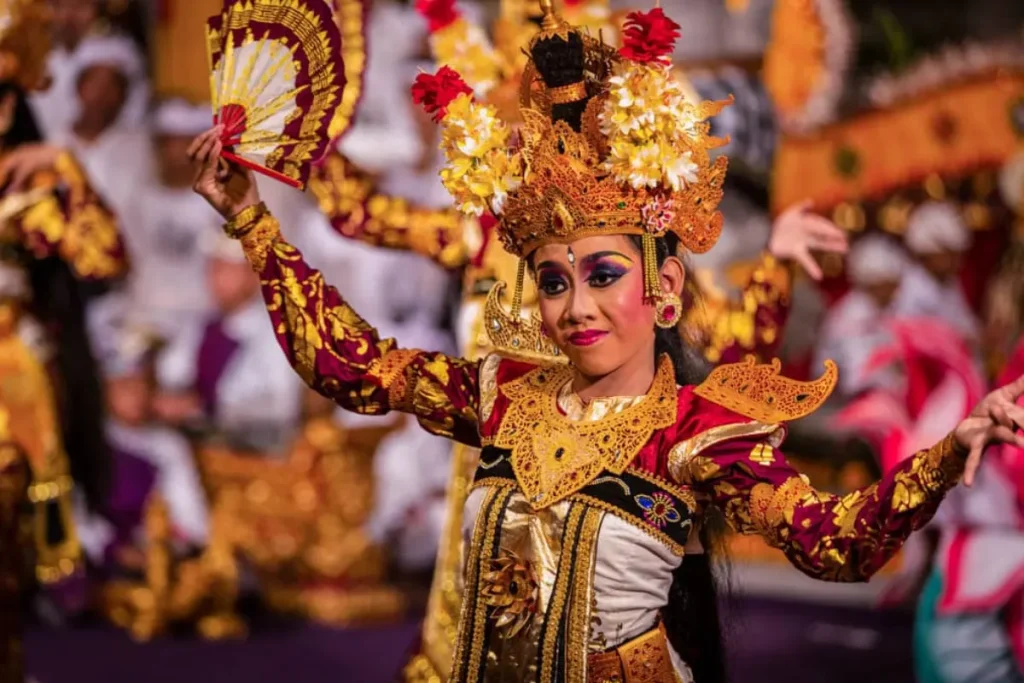
In Bali, dance is more than entertainment, it’s a form of prayer and a connection to the divine. Every performance is considered an offering to the gods, especially those held during temple ceremonies. Dancers undergo spiritual preparation before performing, as their role is to channel the spirit of the story they are telling.
Balinese dance is a sacred and artistic expression deeply rooted in the island’s Hindu beliefs. Each movement tells a story, often drawn from ancient epics like the Ramayana or Mahabharata. Unlike Western dance styles, Balinese dance focuses on controlled, expressive gestures and dramatic facial expressions. Many dances were originally performed only in temples during religious ceremonies. Today, while some dances remain sacred, others are adapted for cultural shows open to the public.
Types of Traditional Balinese Dance
There are many kinds of Balinese dance, but here are a few iconic ones that tourists will most likely encounter:
1. Barong Dance – The Eternal Battle of Good and Evil
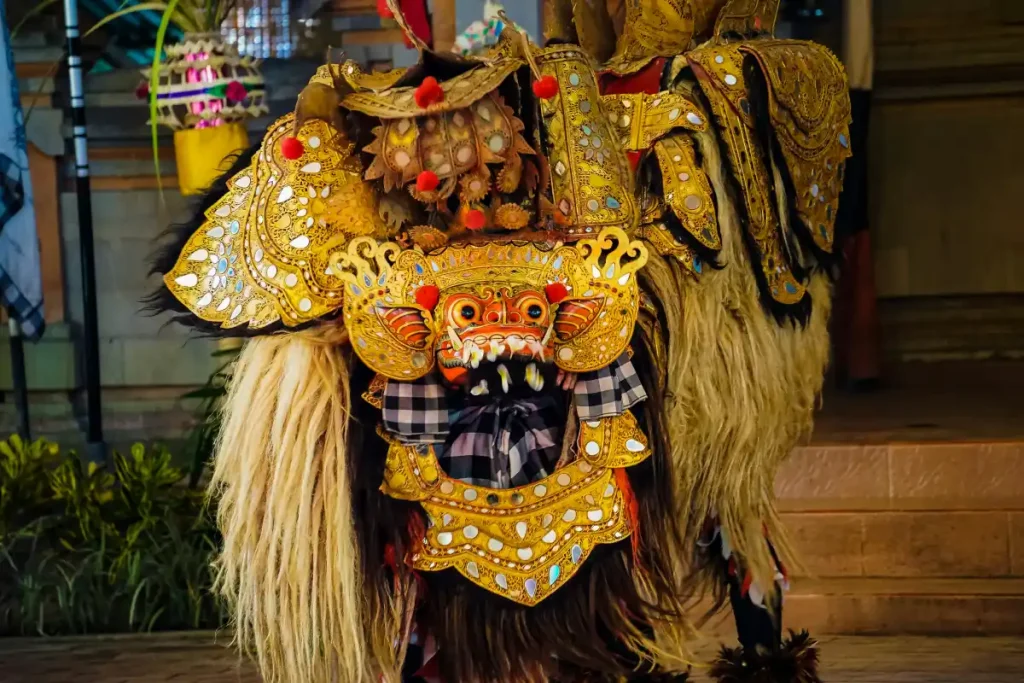
The Barong Dance is one of Bali’s most iconic and spiritually charged performances. This dance is not just a dramatic show, it’s a reflection of the Balinese philosophy of balance, known as Rwa Bhineda, which acknowledges the coexistence of opposing forces in life. Barong appearance is look like a lion with a flamboyant costume, and bulging eyes, is a beloved guardian spirit believed to ward off negative energies. Rangda, on the other hand, is terrifying, a long-haired creature with sharp fangs and bulging red eyes, capable of casting black magic. The dance is filled with powerful symbolic gestures, mystical trance scenes, and dramatic fights, where even kris-wielding warriors fall under Rangda’s spell, only to be saved by Barong’s divine protection.
The performance is often accompanied by a live gamelan orchestra, enhancing the tension and drama. Though the dance may seem theatrical, it is deeply ritualistic and sacred, especially when performed during temple ceremonies.
To witness this magical spectacle, head to Batubulan Village, just outside Denpasar. This village is renowned for its daily Barong and Kris dance performances designed for tourists. Ubud also offers regular shows, often performed in temple courtyards or cultural centers
2. Legong Dance – Grace and Precision in Motion
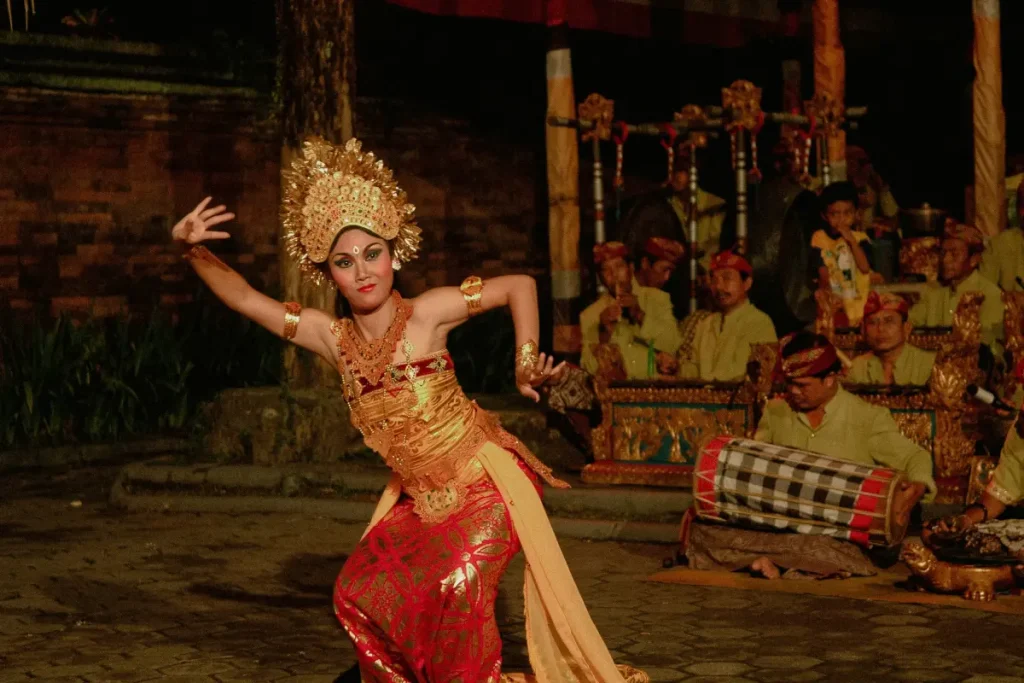
If you’re seeking a performance that showcases refined beauty, elegance, and discipline, the Legong Dance is a must-see. Originally performed in royal courts, Legong was traditionally danced by young girls who were chosen for their beauty, flexibility, and ability to memorize complex choreography. What sets Legong apart is its graceful hand gestures, sharp eye movements, and synchronized footwork, all performed to the hypnotic sounds of a gamelan orchestra. The dancers wear stunning costumes in golden headdresses, vibrant silk sarongs, and intricately decorated fans which amplify the elegance of each movement.
Legong dances often tell stories drawn from Balinese folklore and Hindu epics, such as tales of kings, princesses, and epic battles. One of the most well-known versions is the Legong Kraton (Legong of the Palace), which tells the tragic story of a king who abducts a princess, leading to a tale of love, war, and sorrow.
Though the dancers are typically pre-teens or teenagers, their performances show incredible maturity and emotional depth, making Legong a powerful form of storytelling through motion. The most popular venue to watch Legong dance is the Ubud Palace (Puri Saren Agung), where nightly Legong performances take place. The historical setting, combined with the ambiance of flickering oil lamps, creates a magical atmosphere for visitors.
3. Kecak Dance – The Rhythmic Fire Dance at Sunset
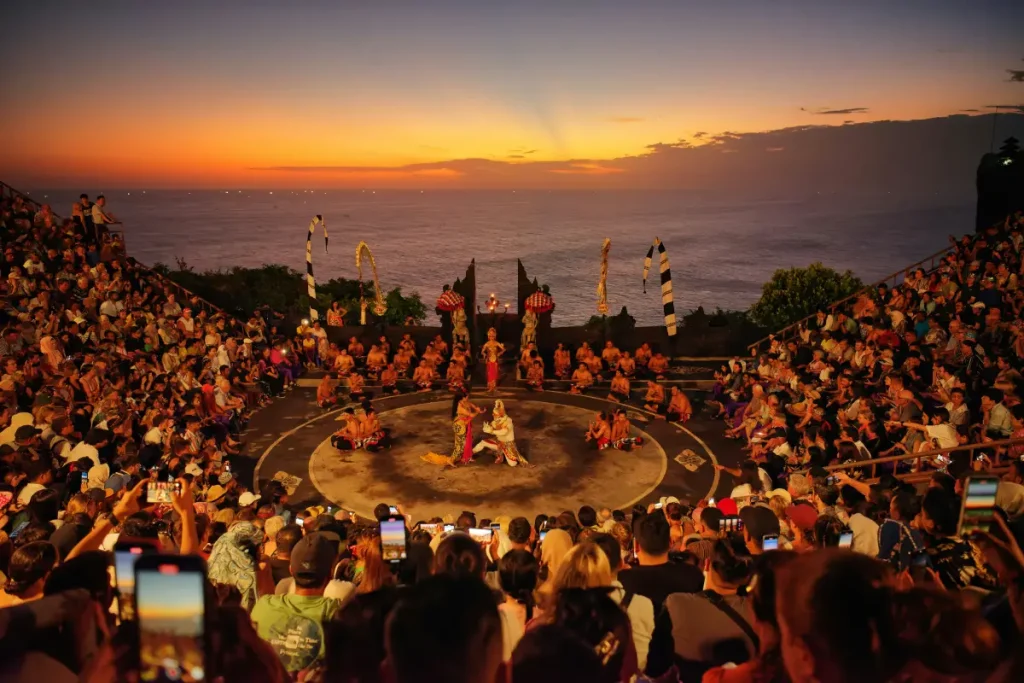
Known for its hypnotic chants and dramatic storytelling, the Kecak Dance is unlike any other traditional Balinese performance. What makes it unique is that it doesn’t use any musical instruments. Instead, a group of 50 to 100 bare-chested men form a circle and chant rhythmic “cak-cak-cak” sounds in unison, creating a human orchestra that drives the entire performance.
The Kecak dance typically dramatizes a scene from the Ramayana, one of India’s great epics. The most popular version features Prince Rama’s battle to rescue his wife, Sita, from the demon king Ravana, with the help of the monkey god Hanuman. The story is visually brought to life through theatrical movements, elaborate costumes, and fiery special effects like torches and fire dances.
Unlike other sacred dances that originated as temple rituals, Kecak was developed in the 1930s specifically as a cultural performance for tourists, inspired by older trance rituals. Yet, it retains a sense of spiritual depth and mesmerizing power.
The most stunning place to experience the Kecak dance is at Uluwatu Temple, perched dramatically on a cliff overlooking the Indian Ocean. The performance is scheduled around sunset, creating a breathtaking backdrop as the story unfolds with crashing waves below and a fiery sky above.
4. Pendet Dance – A Dance of Welcome and Reverence
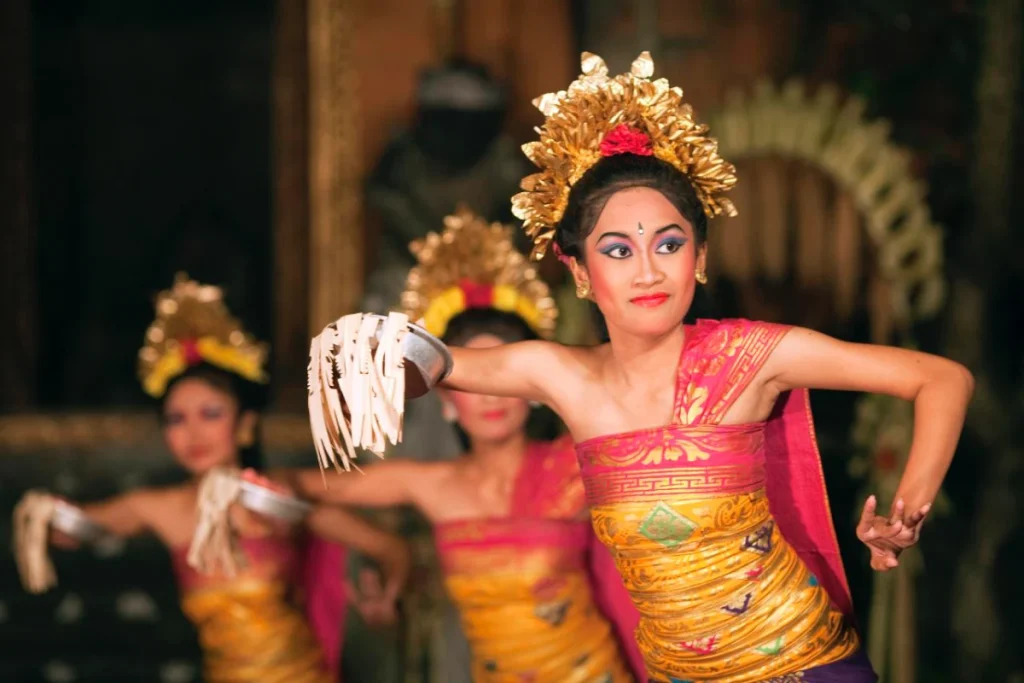
Originally a devotional dance performed in temples, the Pendet Dance is one of the simplest yet most heartfelt expressions of Balinese culture. It was traditionally performed by women carrying offering bowls filled with flower petals, which they would scatter to welcome deities descending into the temple. Over time, Pendet evolved into a welcoming dance for guests, often seen at the beginning of cultural events, festivals, and official ceremonies. Despite its transformation, the essence of the dance, gratitude, respect, and hospitality, remains unchanged.
Pendet is typically performed by groups of female dancers, adorned in traditional attire, moving in graceful unison. The dance is easy to follow yet rich in emotion, making it a favorite introduction for first-time audiences exploring Balinese performing arts. While you may catch Pendet performed at the start of many cultural shows, it is also commonly seen during temple festivals across Bali, especially in areas like Ubud, Sanur, and Gianyar.
Read also: Enchanting Blend of Music, Dance and Culture : Kecak Dance
Where to Watch Balinese Dance Performances in Bali
Whether you are a first-time visitor or a culture enthusiast, Bali offers plenty of opportunities to witness these enchanting dances:
- Ubud Palace (Puri Saren Agung): Offers nightly performances featuring a rotation of Legong, Barong, and other traditional dances. The regal setting enhances the experience.
- Uluwatu Temple: Hosts the famous sunset Kecak Dance every evening. Arrive early to get a good seat and enjoy the ocean view.
- Batubulan Village: A cultural hotspot for daily Barong and Kris Dance shows. Many tours stop here as part of their itinerary.
- ARMA Museum & Setia Darma House of Masks and Puppets: These cultural centers occasionally hold curated dance performances in connection with exhibitions, giving you a more intimate experience with Bali’s performing arts.
Read more: How to Respect Bali Culture During Your Visit: Tips & Guides
Tips for Tourists
- Arrive early to get good seats, especially for sunset performances like the Kecak dance.
- Respect local customs. Some dances are held in temples, so modest clothing is appreciated.
- Support the art. Buying a ticket helps preserve Balinese culture and supports local communities.
Balinese dance offers a beautiful window into the island’s soul. Beyond its visual splendor, it reflects Bali’s deep spiritual roots and storytelling traditions. Whether you are a culture lover or simply curious, witnessing a traditional dance performance is an unforgettable highlight of any Bali trip. While you are in Bali, take a moment to immerse yourself in this captivating cultural experience. You will walk away with a deeper appreciation for the island and its people.